Deep Work Summary: Unlock Focus for Ultimate Productivity
Deep Work is a concept about working with full focus. It means doing tasks without any distractions. This idea comes from Cal Newport, a writer and professor. He explains why deep work is very important today.
What Is Deep Work?
Deep work means working on hard tasks with no interruptions. You focus fully on one thing. This kind of work needs your brain to be very active. It helps you learn more and do better work.
For example, if you write a story or solve a math problem, deep work means you do it without checking your phone or talking to others. Just pure focus.
Why Is Deep Work Important?
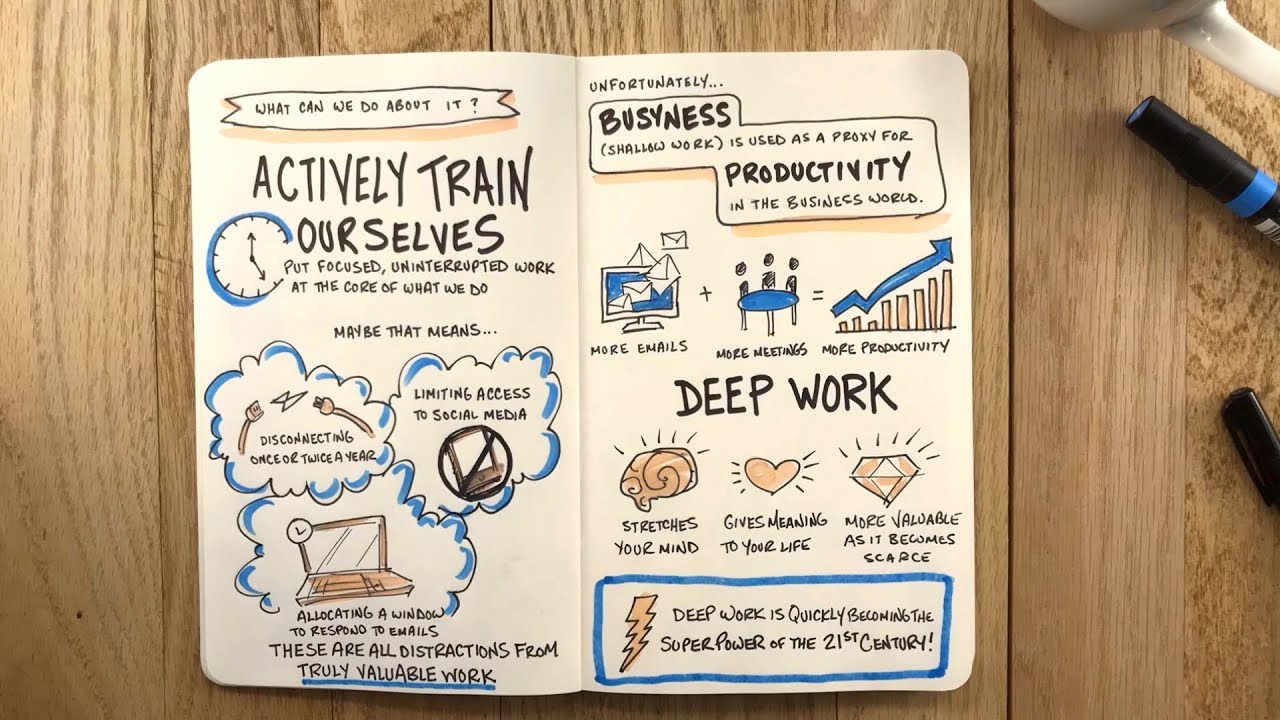
Today, many people spend time on easy tasks. These are called shallow tasks. Examples are answering emails, scrolling social media, or attending meetings without focus. These tasks do not need much brain power.
Deep work is different. It helps you create new ideas and solve big problems. It makes you better at your job. It also helps you learn faster and keep your skills sharp.
Because many people find deep work hard, fewer do it well. This makes deep work very valuable. It can help you stand out in work and life.
How Does Deep Work Help Your Brain?
When you do deep work, your brain builds strong connections. It gets better at focusing and thinking deeply. This helps you solve problems faster.
Also, deep work helps you remember what you learn. You can understand hard ideas more easily. Over time, your brain becomes stronger and smarter.
How to Practice Deep Work
Deep work is not easy at first. You need to build habits to do it well. Here are some simple steps to start:
1. Make Deep Work A Routine
Set a regular time to do deep work every day. For example, you can choose morning hours when your mind is fresh. Stick to this time and make it a habit.
2. Remove Distractions
Turn off your phone or put it away. Close websites or apps that are not needed. Find a quiet place to work where no one can disturb you.
3. Use Time Blocks
Decide how long you will work deeply. It can be 30 minutes or an hour. Use a timer to keep track. Work only on one task during this time.
4. Take Breaks
After a deep work session, take a short break. Walk around, stretch, or rest your eyes. This helps your brain relax and prepare for the next session.
5. Have A Work Shutdown Routine
At the end of the day, have a routine to stop working. Write down what you did and plan for tomorrow. This helps your mind rest and avoid stress.
Four Rules of Deep Work
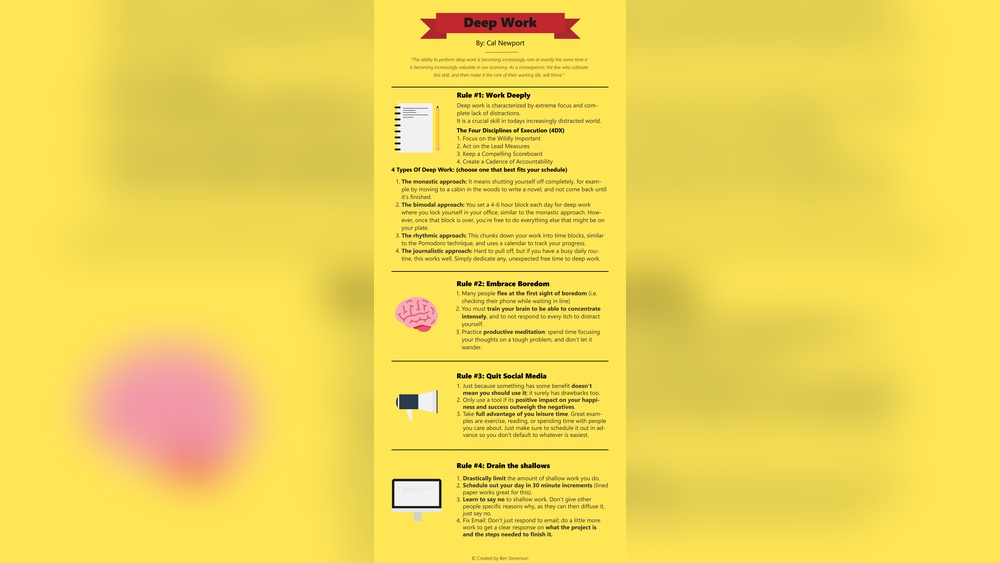
Cal Newport offers four main rules to follow for deep work:
| Rule | Description |
|---|---|
| Work Deeply | Build habits to focus and work without distractions. |
| Embrace Boredom | Train your mind to handle boredom. Avoid switching tasks too fast. |
| Quit Social Media | Limit or stop using social media that distracts you. |
| Drain the Shallows | Reduce time spent on shallow tasks like emails and meetings. |
Benefits of Deep Work
Deep work gives many benefits for work and life. Here are some key advantages:
- Better Focus: Your attention improves over time.
- More Productivity: You finish important tasks faster.
- Higher Quality: Your work is more accurate and creative.
- Skill Growth: You learn new skills more quickly.
- Less Stress: Clear work routines reduce anxiety.
Challenges of Deep Work
Deep work is not easy for many people. Here are some common problems:
- Easy distractions like phones and emails.
- Interruptions from coworkers or family.
- Feeling bored or restless when focusing.
- Difficulty saying no to shallow tasks.
But with practice, these problems can be solved. Start small and build your focus step by step.
How to Improve Your Deep Work Skills
Here are tips to get better at deep work:
- Start Small: Work deeply for 10-20 minutes at first.
- Track Your Time: Keep a log of when you work deeply.
- Set Clear Goals: Know what you want to finish in each session.
- Practice Focus: Try meditation or breathing exercises.
- Limit Multitasking: Focus on one task at a time only.
- Plan Breaks: Use breaks to refresh your mind.
Examples of Deep Work
Many famous people practice deep work. For example:
- A writer who spends hours writing without checking messages.
- A student who studies math problems in a quiet room.
- A software developer who codes without interruptions.
These people get better results because they focus fully. You can do the same with practice.
Frequently Asked Questions
What Are The Four Rules Of Deep Work?
The four rules of deep work are: work deeply by scheduling focused sessions, embrace boredom to build concentration, quit social media to reduce distractions, and drain shallow work to prioritize meaningful tasks. These rules boost productivity and enhance cognitive performance effectively.
What Are The Key Points Of Deep Work?
Deep work means focused, distraction-free work that boosts productivity and learning. Key points include scheduling deep work sessions, eliminating distractions, embracing solitude, and creating rituals to maintain concentration. It requires pushing cognitive limits during uninterrupted periods for maximum results.
What Are The Criticisms Of Deep Work?
Critics argue deep work can be unrealistic in busy workplaces with constant interruptions. It may cause social isolation and burnout. Some find strict focus schedules inflexible. Others say it undervalues collaborative or creative work. Balancing deep work with daily tasks remains a challenge for many.
What Are The Core Ideas In Deep Work?
Deep work means focused, distraction-free work that boosts productivity and learning. It requires scheduling, eliminating distractions, and embracing solitude for better cognitive performance.
Conclusion
Deep work is a way to work better and learn faster. It means focusing without distractions for set times. This helps your brain grow and your skills improve.
Even if it is hard at first, deep work is worth trying. Start with small steps. Make a routine. Remove distractions. Over time, you will see better results in work and life.
Remember, deep work is rare today. Those who do it well get more success. Try deep work to improve your focus and reach your goals.

Similar Posts