The Lean Startup Summary: Unlock Proven Strategies for Rapid Success
Starting a business is hard. Many new ideas fail quickly. “The Lean Startup” by Eric Ries offers a simple way to create new products. It helps startups save time and money. This method focuses on learning fast and making smart decisions.
What Is The Lean Startup?
The Lean Startup is a method for building businesses. It helps to test ideas early and often. Instead of guessing what customers want, startups use real data. This way, they can improve their product step by step. The goal is to find out if the idea works before spending too much.
The method uses three main ideas: build, measure, and learn. These help startups create products that customers really need.

Why Use The Lean Startup Method?
Many startups fail because they spend a lot of time building a product no one wants. They make many assumptions without checking facts. The Lean Startup helps avoid this. It encourages testing ideas quickly and changing plans when needed. This saves money and lowers risk.
The Three Parts of The Lean Startup
1. Vision
Eric Ries says a startup is a group of people working together. Their goal is to make something new under uncertain conditions. Instead of only wanting money, startups should focus on learning. This learning is not guessing. It is “validated learning.” That means using real data from customers to prove progress.
A startup’s vision should guide all actions. It helps to keep the team focused on what matters. The vision is about solving real problems for real people.
2. Steer
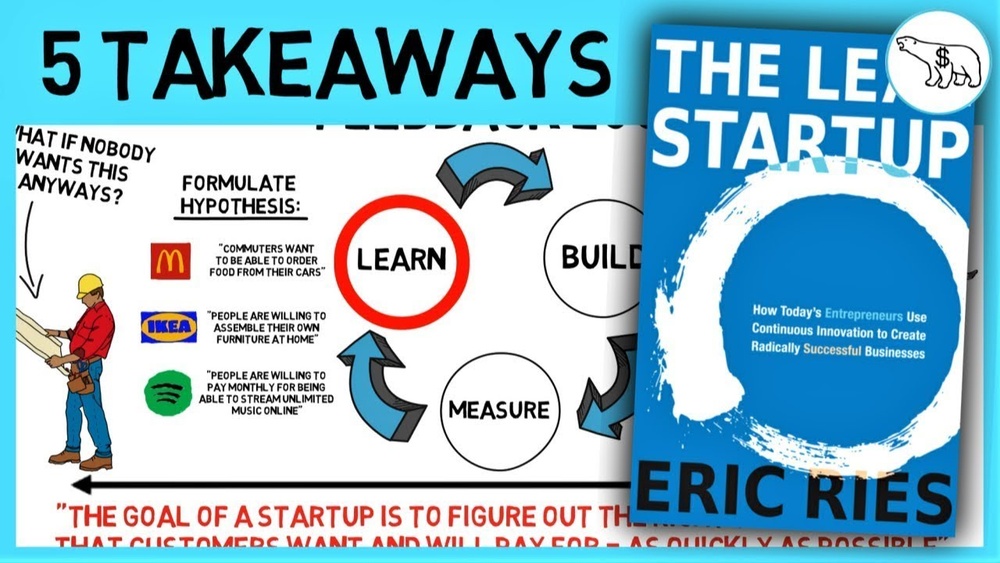
The heart of the Lean Startup is the Build-Measure-Learn loop. This loop helps startups move forward step by step.
- Build: First, create a Minimum Viable Product (MVP). The MVP is a simple version of the product. It has just enough features to start learning from customers.
- Measure: Next, test the MVP with real users. Collect data that shows what works and what doesn’t. Use useful numbers called “actionable metrics.” Avoid “vanity metrics” like total visitors that do not show real progress.
- Learn: Finally, study the data carefully. Decide if you should keep improving the current product or change direction. Changing direction is called a “pivot.”
This loop repeats many times. Each time you learn more about what customers want.
3. Accelerate
Once the startup finds a good product idea, it must grow quickly. The Lean Startup method helps speed up this growth. It uses fast cycles of build, measure, and learn. This keeps improving the product and the business model.
The goal is to build a sustainable business. One that can keep serving customers well over time.
Key Concepts Explained
Minimum Viable Product (mvp)
The MVP is the simplest version of a product. It has only the main features needed to test a business idea. By starting with an MVP, startups avoid wasting time building a full product that customers may not want.
The MVP helps get feedback fast. This feedback guides the next steps.
Validated Learning
Validated learning means proving your ideas with real data. It is not just a guess. Startups use experiments to test hypotheses. If the data shows the idea works, the startup keeps going. If not, it changes course.
Pivot Or Persevere
After learning from customers, startups decide to pivot or persevere. Pivot means changing part of the product or business plan. Persevere means improving the current product because it works well.
This decision is very important. It helps avoid building something no one wants.
Avoid Vanity Metrics
Vanity metrics are numbers that look good but don’t show real progress. Examples include total downloads or page views without deeper meaning. The Lean Startup advises focusing on actionable metrics. These show cause and effect. For example, how many users buy the product after trying it.
How To Use The Lean Startup Method
Here are simple steps to follow the Lean Startup approach:
- Start with an idea. Think about the problem you want to solve.
- Build an MVP. Make the simplest product that can test your idea.
- Measure results. Show the MVP to real customers and collect feedback.
- Learn from feedback. Study what customers say and how they use the product.
- Decide to pivot or persevere. Change your plan or improve your product.
- Repeat the cycle. Keep testing and learning quickly.
Benefits of The Lean Startup
Using this method helps startups in many ways:
- Saves time: Build only what is necessary to learn.
- Saves money: Avoid building products no one wants.
- Reduces risk: Test ideas before full investment.
- Improves products: Use customer feedback to make better products.
- Faster growth: Learn and adjust quickly to market needs.
Who Can Use The Lean Startup?
This method works well for new businesses and innovators. It is useful for:
- Startups with new product ideas
- Small teams testing new markets
- Companies launching new services
- Entrepreneurs wanting to reduce failure risk
Even big companies use Lean Startup ideas to stay flexible and innovate.
Summary Table
| Concept | Description |
|---|---|
| Minimum Viable Product (MVP) | Basic version of a product used to test assumptions. |
| Validated Learning | Learning based on real data, not guesses. |
| Build-Measure-Learn Loop | Cycle of creating, testing, and improving a product. |
| Pivot | Changing the product or business model based on learning. |
| Vanity Metrics | Numbers that look good but do not show real progress. |
Final Thoughts
The Lean Startup is about learning fast and working smart. It helps avoid big mistakes. By testing ideas early, startups can find what customers want. This method is simple but powerful. It guides new businesses step by step. Anyone who wants to build a new product can try it.
Remember: build small, measure carefully, and learn from real users. Change direction if needed. Keep going until you find a product that works well.
Frequently Asked Questions
What Are The 5 Principles Of Lean Startup?
The 5 principles of Lean Startup are: 1) Entrepreneurs create under uncertainty. 2) Use validated learning to measure progress. 3) Build a Minimum Viable Product (MVP). 4) Use the Build-Measure-Learn feedback loop. 5) Decide to pivot or persevere based on data.
What Is Lean Startup In Simple Words?
Lean startup is a method to quickly build and test products using a Minimum Viable Product (MVP). It focuses on learning from real customer feedback and adapting to improve success while reducing waste and risk. This approach uses fast experiments to find a viable business model.
What Are The Key Takeaways From Lean Startup?
The Lean Startup emphasizes building a Minimum Viable Product (MVP), testing hypotheses, and using real customer data. Entrepreneurs must learn, pivot, or persevere quickly to reduce waste and find a viable business model. Validated learning and actionable metrics drive smart decision-making and faster growth.
What Are The 7 Stages Of Startup?
The 7 stages of a startup are: idea generation, market research, business planning, product development, launch, growth, and scaling. Each stage focuses on validating ideas, building products, measuring results, and adjusting strategies to ensure success.

Similar Posts