Samarkand Travel Guide: Ultimate Tips for an Unforgettable Journey
Samarkand is a city full of history and beauty. It is one of the oldest cities in the world. This city lies in Uzbekistan, in Central Asia. Many travelers come here to see its ancient buildings and lively markets.
Why Visit Samarkand?
Samarkand was a key city on the Silk Road. This road connected the East and West. Traders, travelers, and scholars passed through here for centuries. The city has many old buildings with amazing designs. These buildings show the rich culture of the past.
Visitors can enjoy the beautiful blue tiles and grand mosques. The people are friendly and welcoming. Samarkand also has good food and colorful markets. It is a great place to learn about history and enjoy new experiences.
How to Get to Samarkand
You can reach Samarkand by plane or train. The city has a small airport with flights from Tashkent, the capital of Uzbekistan. Many people also travel by train. The train ride from Tashkent to Samarkand is fast and comfortable. It takes about two hours.
Traveling by train lets you see the country’s landscape. You will see flat plains, small villages, and farms. It is a nice way to start your trip.
Best Time to Visit
The best time to visit Samarkand is in spring or autumn. The weather is warm but not too hot. Summers can be very hot, with temperatures above 100°F (38°C). Winters can be cold and snowy. Spring and autumn offer mild weather for walking and sightseeing.
Top Places to See in Samarkand
Samarkand has many famous sites. Here are the top places you should not miss:
1. Registan Square
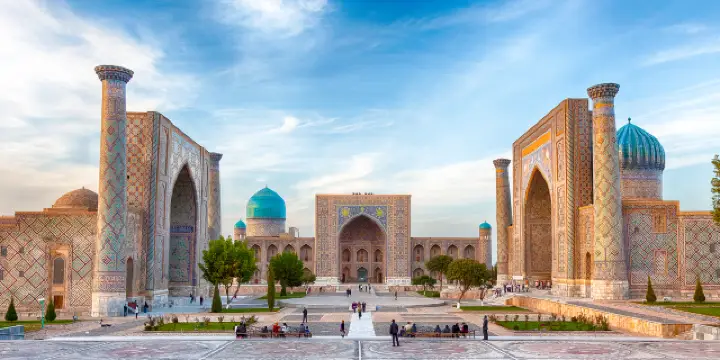
This is the heart of Samarkand. Registan means “sandy place.” It is a large square surrounded by three madrasahs (old schools). These buildings have beautiful blue tiles and tall towers. The square is very popular for photos and cultural events.
2. Bibi-khanym Mosque
Built in the 1400s, this mosque was one of the largest in the Islamic world. It was named after Timur’s wife, Bibi-Khanym. The mosque has huge columns and a big dome. Though partly ruined, it still shows its grand size and beauty.
3. Siyob Bazaar
This is the main market in Samarkand. Here, you can buy fresh fruits, nuts, spices, and local snacks. The market is lively and colorful. It’s a great place to see local life and taste Uzbek food.
4. Gur-emir Mausoleum
This is the tomb of Amir Timur, a famous ruler. The building has a large blue dome and detailed decorations. It is an important historical site and a symbol of Samarkand.
5. Shah-i-zinda
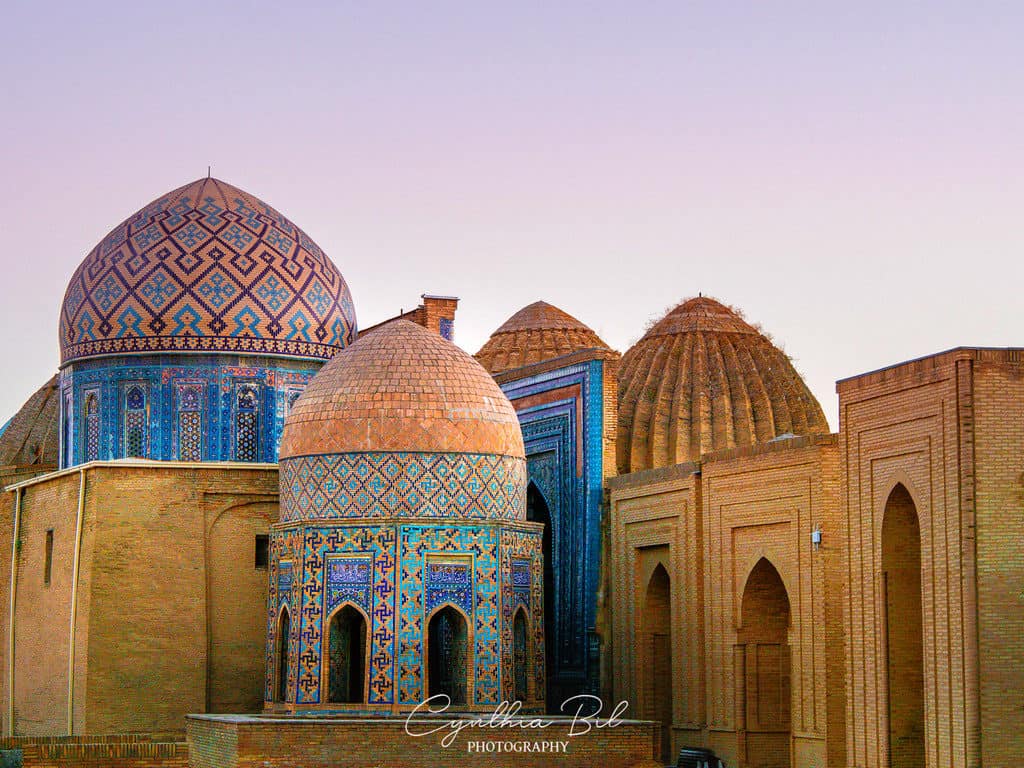
A street full of mausoleums and tombs. The walls are covered with beautiful tiles. It feels like walking through a colorful story. Many visitors come early in the morning to see the sunrise here.
6. Ulugh Beg Observatory
Built by Ulugh Beg, a famous scientist and ruler. The observatory was used to study stars and planets. It shows the city’s rich history in science and learning.
What to Eat in Samarkand
Uzbek food is tasty and fresh. Here are some dishes to try:
- Plov: A rice dish with meat, carrots, and onions.
- Shashlik: Grilled meat on skewers.
- Shurpa: A hearty meat and vegetable soup.
- Non: Traditional round bread baked in clay ovens.
Many restaurants offer meals with fresh bread and salads. Try the local tea as well. It is often served with sweets or dried fruits.
Where to Stay in Samarkand
Samarkand has many places for tourists to stay. You can find hotels, guesthouses, and hostels. Many are near the city center and main sights. Staying close to Registan Square is a good choice.
Prices are usually affordable. Some hotels offer traditional Uzbek decor. This adds to the local experience.
How to Get Around Samarkand
You can explore Samarkand on foot easily. Many sights are close to each other. Walking lets you enjoy the city’s streets and markets.
Taxis are cheap and common. You can also use buses or shared minibuses. Make sure to agree on the taxi price before the ride. This will avoid confusion later.
Safety and Tips for Travelers
Samarkand is generally safe for tourists. Still, take usual care with your belongings. Avoid walking alone late at night in quiet areas.
Learn a few words in Uzbek or Russian. People appreciate when visitors try to speak their language. Also, dress modestly, especially when visiting mosques.
How Many Days to Spend in Samarkand?
Two or three days are enough to see the main sights. One day can be spent visiting Registan, Bibi-Khanym Mosque, and Siyob Bazaar. The next day, explore Shah-i-Zinda, Gur-Emir, and Ulugh Beg Observatory.
If you want to relax and enjoy the city slowly, stay longer. Take time to visit nearby villages or try more local food.
Nearby Places Worth Visiting
Outside Samarkand, some spots are worth a visit. Konigil Village is famous for silk making. You can see how silk is made by hand there.
Also, the city of Shahrisabz is nearby. It is the birthplace of Amir Timur. The city has old ruins and monuments to explore.
Summary
Samarkand is a city full of history, culture, and beauty. It offers many ancient buildings, colorful markets, and tasty food. The city is easy to explore and welcoming to travelers.
Plan your trip for spring or autumn. Spend at least two days to see the best sights. Try local dishes and enjoy the friendly atmosphere.
Whether you love history, architecture, or food, Samarkand has something for you.
Frequently Asked Questions
How Many Days Are Enough For Samarkand?
Two to three days are ideal to explore Samarkand’s key attractions like Registan, Bibi-Khanym Mosque, and Shah-i-Zinda. This allows time to enjoy local markets, historic sites, and traditional Uzbek cuisine comfortably.
Are Uzbeks Friendly To Tourists?
Uzbeks are known for their warm hospitality and friendliness toward tourists. Visitors often experience genuine kindness and helpfulness. Locals welcome guests with open arms, making travel in Uzbekistan enjoyable and memorable.
Is Samarkand Worth Visiting?
Samarkand offers stunning Islamic architecture, rich history, vibrant bazaars, and warm hospitality. It’s a must-visit destination for culture and heritage lovers.
Is It Safe To Walk Around Samarkand At Night?
Walking around Samarkand at night is generally safe in well-lit, busy areas. Stay cautious in quiet or unfamiliar spots. Use local advice to avoid risks.

Similar Posts