The Art of War is an old book written by Sun Tzu, a Chinese military leader. It teaches about war and strategy. But it is more than just fighting. It talks about planning, thinking, and winning without fighting. This book is still useful today for many people.
What Is The Art of War About?
The book is about how to win wars and conflicts in the smartest way. Sun Tzu says the best way to win is to avoid fighting if possible. The goal is to stop the enemy without a battle. It is better to use your mind than just your strength.
Sun Tzu’s ideas focus on three main points:
- Preparation
- Flexibility
- Knowing your enemy
He also talks about using tricks and being clever to confuse the enemy. This is called deception.
Core Principles of Sun Tzu’s Strategy
Sun Tzu’s lessons are clear. Here are some of the most important ideas:
1. Win Before You Fight
Sun Tzu says the best victory comes from planning. You must study the situation well. Learn about your enemy and the land. Then, choose the best time and place to act. If you plan well, you may win without a battle.
2. Deception Is Key
“Appear weak when you are strong, and strong when you are weak.” This means you should hide your true power. Make the enemy guess and be confused. Use fast moves and surprise attacks to control the fight.
3. Use Spies And Intelligence
Knowing what the enemy is doing is very important. Sun Tzu says spies help you learn secrets. With good information, you can make better choices and avoid mistakes.
Main Chapters and Their Lessons
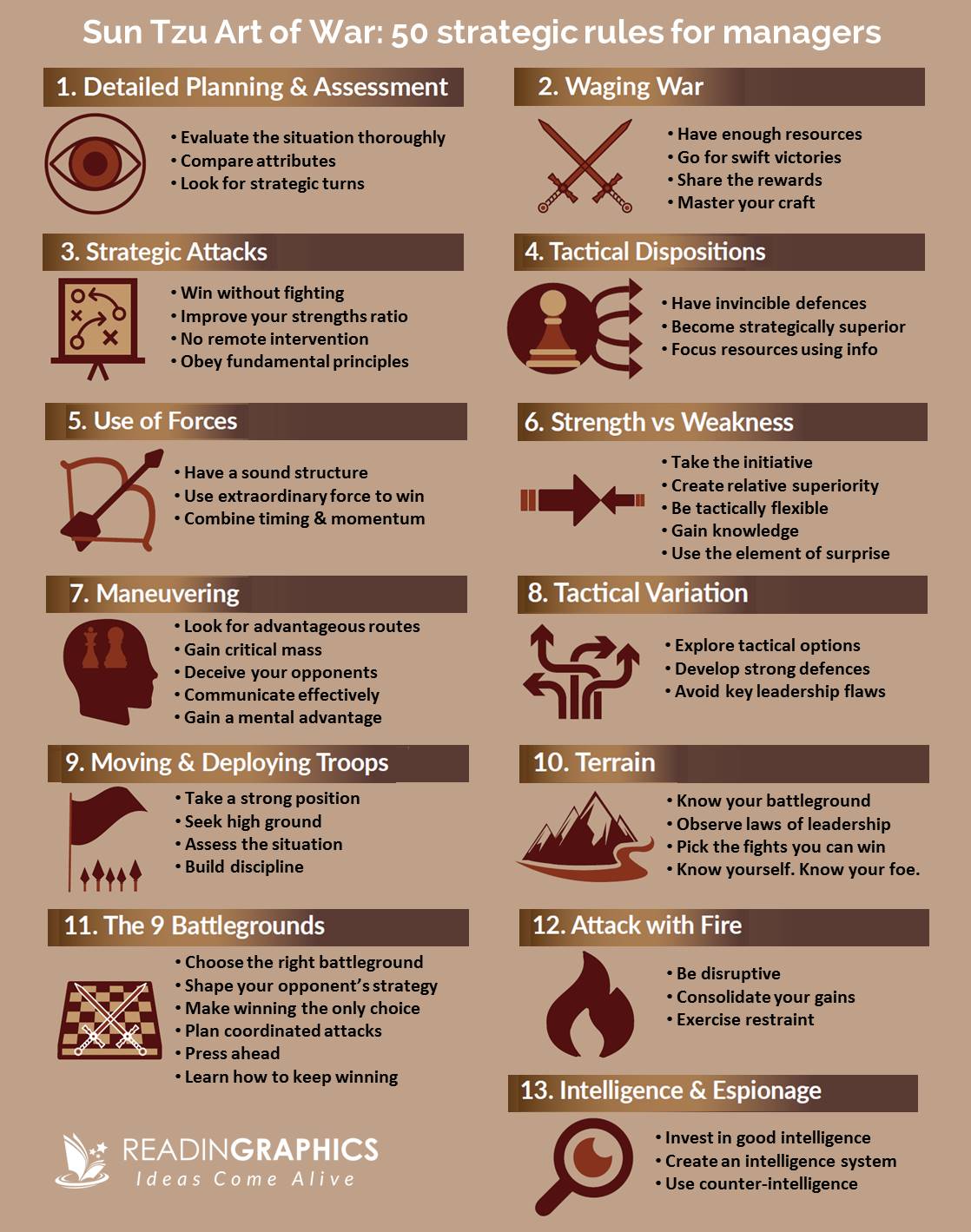
The Art of War has 13 chapters. Each one teaches a different lesson.
| Chapter | Main Idea | Summary |
|---|---|---|
| Laying Plans | Planning | Think about morals, weather, land, and army discipline before acting. |
| Waging War | Costs of War | War is expensive. Fight fast to save resources. |
| Attack by Stratagem | Winning Without Fighting | Try to beat the enemy’s plan instead of their army. |
| Tactical Dispositions | Defense and Offense | Protect your weak points and attack the enemy’s weak spots. |
| Energy | Use of Force | Use timing and power well to win battles. |
| Weak Points and Strong | Attack the Enemy’s Weakness | Strike where the enemy is not ready. |
| Maneuvering | Moving Armies | Move carefully and use the land to your advantage. |
| Variation in Tactics | Be Flexible | Change your plans when the situation changes. |
| The Army on the March | Reading Signs | Watch the enemy’s actions to find their plans and weaknesses. |
| Terrain | Types of Ground | Know the land and use it well in battle. |
| The Nine Situations | Different Battle Situations | Manage soldiers’ feelings in different stages of war. |
| The Attack by Fire | Use of Environment | Use fire and nature carefully in battle. |
| The Use of Spies | Importance of Intelligence | Good spies can change the war’s outcome. |
Why Is The Art of War Still Important?
This book is old but still useful. It helps people think better. Business leaders, sports teams, and even teachers use its ideas. The lessons about planning and knowing the opponent work in many areas.
Sun Tzu teaches us to be smart and calm. To win, we must plan well. We must watch our enemies and use our strengths wisely. The book shows us how to stay strong and avoid unnecessary fights.
Key Quotes from The Art of War
- “The supreme art of war is to subdue the enemy without fighting.”
- “If you know the enemy and know yourself, you need not fear the result of a hundred battles.”
- “All warfare is based on deception.”
- “Victorious warriors win first and then go to war, while defeated warriors go to war first and then seek to win.”

Summary
The Art of War is more than a book about fighting. It teaches how to think, plan, and act wisely. It says the best victory is one without fighting. It values intelligence, preparation, and flexibility.
Sun Tzu’s ideas help people in many fields. Learning these lessons can help you solve problems and win challenges. The book shows that with good planning and smart moves, you can succeed even against tough enemies.
Frequently Asked Questions
What Are The Main Points Of The Art Of War?
The Art of War emphasizes winning through planning, deception, and flexibility. It advises knowing your enemy, exploiting weaknesses, and using spies. Success relies on preparation, swift action, and psychological tactics to subdue opponents without direct conflict.
What Are The 5 Rules Of The Art Of War?
The five rules of The Art of War are: plan carefully, use deception, strike weaknesses, manage energy, and adapt tactics. These principles ensure victory without unnecessary conflict by understanding the enemy and environment. Strategic preparation and flexibility remain key to winning battles effectively.
What Is Sun Tzu’s Most Famous Quote?
Sun Tzu’s most famous quote is, “The supreme art of war is to subdue the enemy without fighting. ” This highlights strategy over conflict. It emphasizes winning through planning, deception, and understanding your opponent’s weaknesses. This quote remains central to military and business strategies today.
What Are The 5 Key Points Of The Art Of War?
The five key points of The Art of War are: plan thoroughly, use deception, know your enemy, strike weak spots, and adapt tactics quickly. These principles emphasize winning with strategy, minimizing conflict, and maximizing efficiency in warfare.